





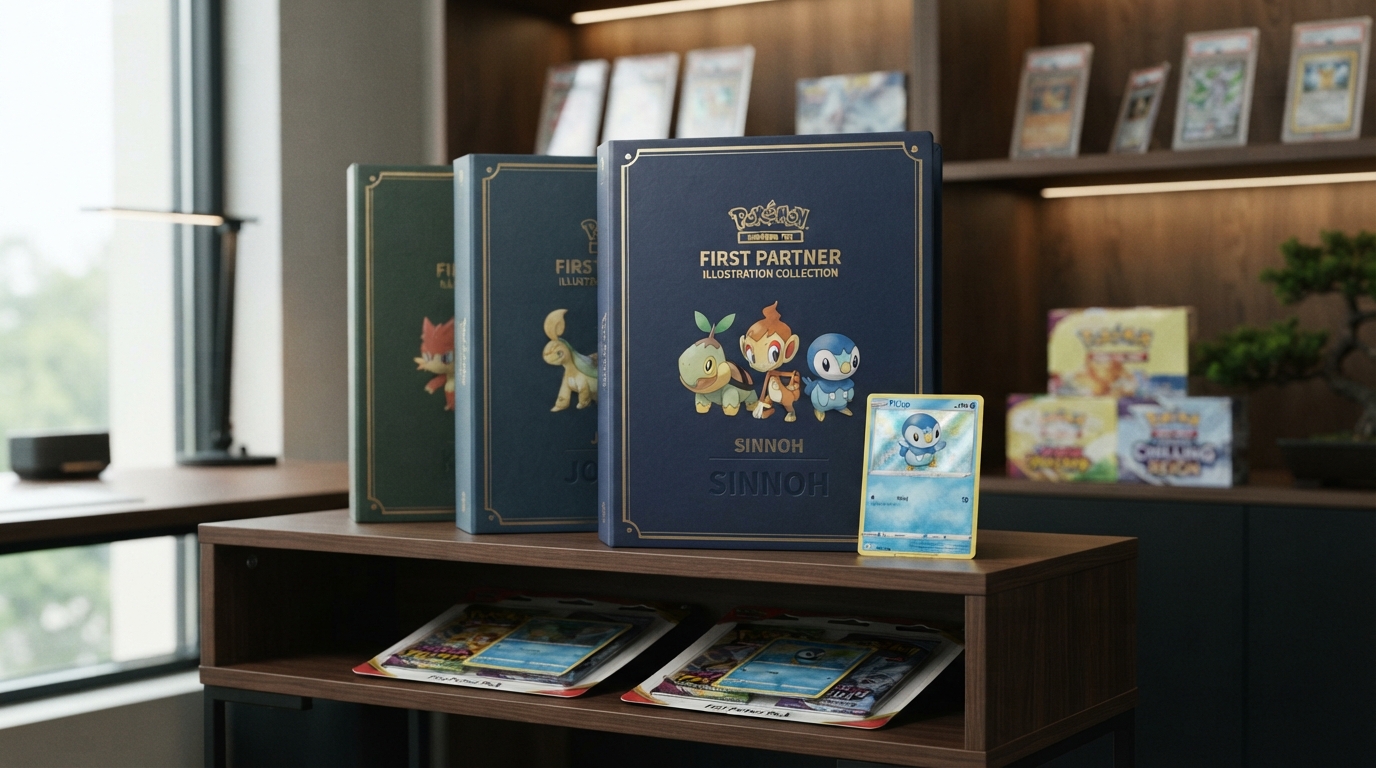
The Artistic Evolution of Starters: Demystifying the Pokémon TCG First Partner Illustration Collection Series 3
For over a quarter of a century, the ritual of choosing a starter Pokémon has been a foundational milestone for millions of gamers worldwide. Whether your journey began in the pixelated fields of Kanto or the lush environments of Paldea, that first choice defines your adventure. In the Pokémon Trading Card Game (TCG), this nostalgia is not just preserved; it is celebrated. The release of the Pokémon TCG First Partner Illustration Collection Series 3 represents a high-water mark for both nostalgic collectors and modern aesthetic enthusiasts.
This collection moves beyond basic gameplay mechanics to focus entirely on visual storytelling, showcasing iconic starter Pokémon through breathtaking, full-art illustrations. As the secondary market for Pokémon cards continues to mature, understanding the artistic value, print variations, and investment potential of Series 3 is essential for any serious collector. In this definitive guide, we will dissect every element of this landmark release, analyzing its market dynamics, artistic pedigree, and preservation strategies.
What is the First Partner Illustration Collection Series 3?
The First Partner Illustration Collection Series 3 is a premium, curated product line designed to highlight the starter Pokémon of specific regions—most notably focusing on the beloved Generation III (Hoenn) and Generation IV (Sinnoh) eras. Unlike standard booster expansions, this collection is structured around oversized (jumbo) promotional cards and highly detailed, alternate-art reprints that emphasize the natural habitats and personalities of these starter creatures.
Historically, the First Partner series began as a celebration of the franchise’s 25th anniversary, but its overwhelming success prompted the Pokémon Company to continue the line. Series 3 refines the formula by introducing textured foil patterns, expanded borders, and collaborative artwork from some of the industry’s most renowned fantasy illustrators. It bridges the gap between classic card layouts and the modern “Special Illustration Rare” (SIR) aesthetic that dominates contemporary sets like Scarlet & Violet.
Product Specifications and Configurations
To help you understand exactly what to expect when purchasing this product, we have outlined the core specifications of the standard retail release below:
| Feature | Specification Details |
|---|---|
| Featured Pokémon | Treecko, Torchic, Mudkip (Hoenn) & Turtwig, Chimchar, Piplup (Sinnoh) |
| Promo Card Formats | 3x Jumbo Oversized Foil Cards, 3x Standard-Sized Alternate Art Promos |
| Included Booster Packs | 4x Pokémon TCG Booster Packs (Typically historical and modern mix) |
| Additional Accessories | 1x Collector’s Portfolio (Sized specifically for Jumbo Cards) |
| MSRP (Retail) | $29.99 USD |
Visual Breakdown: Analyzing the Artistic Masterpieces in Series 3
The true value of the First Partner Illustration Collection Series 3 lies in its visual narrative. For years, Pokémon card art was confined to small, square frames. The modern era has broken these boundaries, allowing artists to treat the entire cardboard surface as a canvas. This evolution requires a deep understanding of composition, lighting, and character integration.
To truly appreciate these designs, we consulted the creative team at Vox Illustration, a premier agency specializing in custom digital illustration and visual design. Their experts point out that Series 3 excels because of its sophisticated use of environmental storytelling. The artists do not simply place the Pokémon in a vacuum; they use dynamic perspective, atmospheric lighting, and interactive backgrounds to make the creatures feel like living, breathing parts of an ecosystem.
The Hoenn Trio: Treecko, Torchic, and Mudkip
- Treecko (Illustration by Kouki Saitou): Saitou captures Treecko’s cool, stoic demeanor by placing it high in the canopy of a temperate rainforest. The use of dappled sunlight filtering through the leaves creates a realistic sense of depth, highlighting the texture of the bark and the sleekness of Treecko’s design.
- Torchic (Illustration by sowsow): Known for soft, whimsical textures, sowsow depicts Torchic playing near a sunny meadow. The color palette is warm and inviting, dominated by soft yellows, pastel oranges, and gentle greens that emphasize Torchic’s playful and innocent nature.
- Mudkip (Illustration by Asako Ito): Utilizing a unique clay-sculpted style, Ito brings Mudkip to life in a muddy riverbed. The physical depth of the clay model contrasted against a soft-focus background gives the card an incredibly tactile, three-dimensional quality that stands out in any binder.
The Sinnoh Trio: Turtwig, Chimchar, and Piplup
- Turtwig: Illustrated with deep, earthy tones that ground the Grass-type starter in a fertile forest floor, emphasizing its slow, sturdy, and reliable characteristics.
- Chimchar: Features dynamic, high-contrast action poses against a rocky, volcanic backdrop, using bright oranges and deep purples to make the flame on its tail pop visually.
- Piplup: Showcases a serene, icy coastline where the Water-type starter glides effortlessly, utilizing cool blue hues and pristine white highlights to capture the crispness of the Sinnoh region’s northern climate.
Inside the Box: Pack Selection and Pull Rate Expectancy
While the promotional cards are the primary draw, the booster packs included within the Series 3 boxes add an element of excitement for those who love the thrill of the pull. The Pokémon Company carefully selects these packs to provide a balanced mix of current-era sets and slightly older, out-of-print expansions.
Typically, a Series 3 box contains a mix resembling the following:
- 2x Modern Era Booster Packs: Such as Scarlet & Violet Base Set, Paldea Evolved, or Obsidian Flames. These packs offer a chance at pullable Special Illustration Rares.
- 1x Sword & Shield Mid-Era Pack: Such as Astral Radiance or Lost Origin, which feature the highly sought-after Trainer Gallery cards.
- 1x Specialty/Vintage Pack: Depending on the specific print run, some boxes include celebrated specialty sets like Crown Zenith, which boast incredibly high pull rates and gorgeous artwork.
Because the promotional cards are guaranteed, the “floor value” of this box is exceptionally high. Even if the booster packs do not yield ultra-rare cards, you walk away with a set of pristine, highly collectible illustration cards that are exclusive to this specific release.
Market Value Analysis: Is Series 3 a Worthwhile Investment?
When analyzing the Pokémon TCG secondary market, illustration-focused products historically perform exceptionally well over long-term horizons. Collectors prioritize visual appeal over competitive viability when it comes to display pieces. Because the First Partner Illustration Collection Series 3 focuses heavily on legendary starters, its long-term demand is insulated by generational nostalgia.
Let’s look at the market performance metrics for these cards, comparing raw copies to professionally graded versions (PSA 9 and PSA 10):
| Card Name (Series 3 Promo) | Raw Market Value | PSA 9 Mint Value | PSA 10 Gem Mint Value | Grading Difficulty (Out of 10) |
|---|---|---|---|---|
| Treecko Full Art Promo | $8.50 | $22.00 | $65.00 | 7/10 (Centering issues common) |
| Torchic Full Art Promo | $9.00 | $24.00 | $70.00 | 6/10 (Slight corner wear) |
| Mudkip Full Art Promo | $12.50 | $30.00 | $95.00 | 8/10 (High print line frequency) |
| Sinnoh Trio (Set of 3) | $22.00 | $55.00 | $160.00 | 7/10 (Average across all three) |
Note: Market values fluctuate based on demand, print run sizes, and overall economic conditions. These figures represent averages compiled from major TCG marketplaces and historical auction data.
Factors Driving the Value of Series 3
Several key market forces contribute to the steady appreciation of this collection:
- The “Starter Premium”: Starter Pokémon possess a universal appeal that transcends specific generations. A collector who stopped playing in 2005 is still highly likely to buy a Mudkip or Torchic card out of pure nostalgia.
- Jumbo Card Collectibility: While jumbo cards were once dismissed by competitive players, specialized binder releases and display frames have turned them into highly desirable wall art and desk display items.
- Print Quality Control: Promotional cards packaged in windowed boxes are notoriously difficult to find in pristine, PSA 10-worthy condition. They are prone to “binder dings” and corner scuffs from the plastic inserts, making graded Gem Mint copies exceedingly rare and valuable.
How to Spot Counterfeits and Protect Your Investment
As the value of collectible card games rises, so does the prevalence of sophisticated counterfeits. Protecting yourself from fake cards is paramount, especially when purchasing through online marketplaces or peer-to-peer trading applications.
The Texture and Sheen Test
Authentic Series 3 promotional cards utilize a specific diagonal holofoil pattern that reacts dynamically when rotated under a direct light source. Counterfeit cards often display a static, vertical rainbow sheen that looks dull and lacks depth. Additionally, modern full-art promos feature a subtle, fingerprint-like micro-texture across the surface. If a card is completely smooth to the touch but claims to be an ultra-rare full-art promo, it is highly likely a fake.
Font and Border Consistency
The Pokémon Company uses a proprietary font for all card text. Counterfeiters often struggle to replicate the exact kerning (spacing between letters), font weight, and size of the energy symbols. Always compare a suspect card to a known authentic copy or a high-resolution scan from an official database. Pay close attention to the thickness of the yellow or silver borders; fakes often have uneven borders or incorrect color hues.
The Tear and Light Tests (Use with Caution)
Authentic Pokémon cards are constructed by sandwiching a thin, black layer of opaque material between two sheets of paper. This gives the card structural integrity and prevents light from passing through easily. If you shine a bright smartphone flashlight through the back of an authentic card, very little light should penetrate. If the card glows brightly like a sheet of standard printer paper, it is a counterfeit.
The Collector’s Roadmap: Storage, Display, and Preservation Strategies
Owning a piece of Pokémon history is only half the battle; preserving its condition is where true hobbyists separate themselves from casual buyers. Environmental factors like humidity, ultraviolet (UV) light, and physical handling can quickly degrade a card from a PSA 10 to a damaged, unsellable piece of cardboard.
Handling Best Practices
- Wash and dry your hands thoroughly before touching raw cards to remove natural oils and moisture. Avoid using hand sanitizer immediately before handling, as the alcohol can degrade the card’s protective gloss coating.
- Always handle cards by their edges rather than pressing down on the face of the card, which can cause micro-scratches on the delicate foil surface.
The “Double-Sleeving” Method
For standard-sized promotional cards, double-sleeving is the gold standard of preservation. First, slide the card into a perfect-fit sleeve (inserted from the top down). Next, slide the sleeved card into a standard deck protector sleeve (inserted from the bottom up). This creates a nearly airtight seal that protects the card from dust, moisture, and accidental liquid spills.
Storing Oversized (Jumbo) Cards
Because Jumbo cards do not fit into standard card sleeves or binders, they require specialized storage solutions:
- Jumbo Card Binders: Purchase official Pokémon TCG portfolios designed specifically for oversized cards. These prevent the corners from bending or warping.
- Toploaders for Jumbo Cards: Rigid plastic toploaders are available in 6×8 inch sizes, which fit the Series 3 jumbo cards perfectly. Pair these with oversized sleeves for maximum protection.
- Framing: If you choose to display your jumbo cards on a wall, use frames equipped with UV-resistant glass. Direct sunlight will fade the vibrant inks of your cards within a matter of months if left unprotected.
Frequently Asked Questions Regarding Series 3
What makes Series 3 different from Series 1 and 2?
Series 3 focuses primarily on the middle generations of the Pokémon franchise (Generations III and IV), whereas Series 1 and 2 focused heavily on Kanto (Gen I) and Johto (Gen II). Additionally, Series 3 features updated holographic foil patterns and a higher standard of micro-texturing on the promotional cards, reflecting the evolution of the Pokémon Company’s printing capabilities.
Are the jumbo cards in this collection playable in official tournaments?
No, jumbo/oversized cards are strictly collectible display pieces and are not legal for use in sanctioned Pokémon TCG tournaments. They do not fit in standard decks and cannot be shuffled properly. However, the standard-sized promotional cards included in the set are fully legal for competitive play in formats where their original prints are allowed.
Should I open my Series 3 box or keep it sealed?
This depends on your goals as a collector. Sealed product generally appreciates at a more stable rate because it preserves the “mystery” of the booster packs inside and guarantees the pristine condition of the promotional cards. However, if you wish to display the cards in a binder or submit them for professional grading, opening the box is necessary. Many collectors choose to buy two boxes—one to open and enjoy, and one to keep sealed in a cool, dry place for long-term investment.
Where can I purchase authentic Series 3 boxes safely?
To avoid tampered or resealed products, always purchase from reputable sources. Local game stores (LGS), official retail chains (like Target or Best Buy), the official Pokémon Center website, or verified sellers with high ratings on major TCG marketplaces are your safest options. Avoid buying sealed boxes from unverified sellers on general classified websites where return policies are non-existent.